

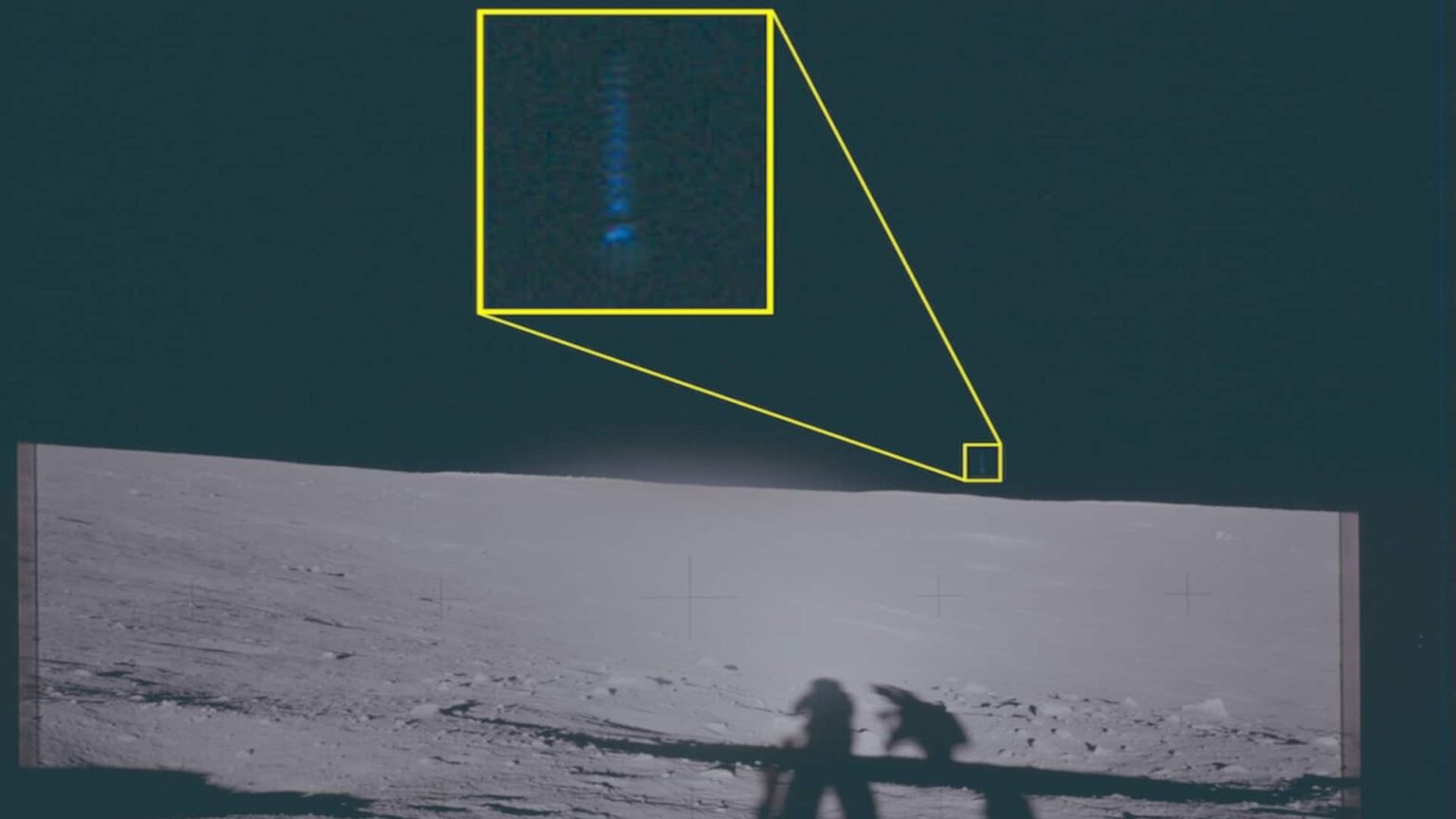
Image via some agency in the USA.

|
In a landmark moment for both transparency and public engagement, significant disclosures from NASA, the Department of War, and the FBI unfolded on May 8th. The declassification of various reports has opened a trove of information, unraveling narratives around unidentified aerial phenomena (UAP) connected to notable NASA missions like Apollo 12 and Apollo 17. Among the documents released are transcripts and eyewitness accounts that provide a backdrop for future storytelling in gaming—a sector increasingly drawing inspiration from real-world mysteries.
Featured prominently in the release are reports detailing strange lights recorded during Apollo missions, alongside recent military footage capturing unidentified objects in Earth’s atmosphere. Furthermore, historical accounts from wartime Germany document UAP sightings near military installations. Though these documents may not offer definitive proof of extraterrestrial life, they are significant in altering how both society and political bodies perceive UAP phenomena, moving us towards a more open discourse around potentially life-altering questions.
Core Gameplay Features
The excitement surrounding this information isn’t just pertinent to conspiracy theorists; game developers are keenly attuned to the possibilities it presents. This disclosure has the potential to serve as a rich foundation for narratives that have long captivated audiences in gaming, particularly around themes of exploration and the unknown. Titles such as The Outer Wilds have already begun to explore these motifs, harnessing scientific curiosity alongside puzzle-solving gameplay to immerse players in the wonders—and terrors—of interstellar discovery. The mechanics of exploration in these games compel players to navigate alien environments, solve celestial puzzles, and grapple with the mysteries of the universe, echoing the philosophical questions raised by scientists like Enrico Fermi regarding the existence of extraterrestrial entities.
Don’t Nod’s newly released Aphelion, which debuted on April 28th, exemplifies these trends, placing players in the role of a solo astronaut navigating rugged landscapes. The game innovatively blends elements of survival and narrative as players confront traumatic landscapes and shifting realities. Supported by the European Space Agency, the gameplay mechanics enhance immersion through realistic portrayals of space travel challenges, engaging players in urgent missions that echo the pressing environmental and existential themes of our time.
Graphics and Performance
Another standout title that aligns with the themes inspired by NASA’s disclosures is The Expanse: Osiris Reborn. Developed by Owlcat Games, this offering builds on the franchise’s core philosophy regarding humanity’s innate flaws carried into new frontiers. Set in a vividly constructed 24th-century universe featuring colonies across celestial bodies like Luna and Mars, the graphical systems are designed to evoke a sense of both wonder and foreboding. Players are tasked not only with exploration but also navigating the complex social dynamics of a fractured human race, enhancing both the storytelling and player experience through richly detailed environments.
Archetype Entertainment’s Exodus, helmed by veterans from the beloved Mass Effect franchise, promises to take advantage of cutting-edge technology to create visually stunning representations of space travel. The gameplay mechanics surrounding time dilation and interstellar conflicts offer players a mind-bending experience that blends scientific theory with compelling narratives. In Exodus, time inequity—the concept of experiencing time differently due to high velocities—introduces layers of strategy as players maneuver through existential threats while grappling with the paradoxes of time itself.
Community Response
The impact of such scientific revelations extends beyond development studios, as gamers and the community engage fervently with these themes. The recent Artemis II mission has revitalized interest in titles like Kerbal Space Program, witnessing player engagement levels not seen since its initial launch in 2015. Players find joy in exploring space simulations that channel both the absurd realities of actual space missions and their own imaginative scenarios, solidifying how real-world events shape gaming culture.
Future Updates
As we look towards the future, the ramifications of the latest UAP disclosures remain to be seen. The gaming industry thrives on innovation inspired by contemporary topics, and with the complexities surrounding UAP and potential extraterrestrial existence now firmly in the public discourse, we anticipate an influx of creative interpretations. Whether through enhanced mechanics, visionary graphics, or evolving narrative frameworks, it is clear that both game developers and players are poised to benefit from this newfound openness in our collective exploration of the unknown.
Last Updated On: May 8, 2026 4:30 pm CEST