

Going Medieval: A Deep Dive into Colony Simulation
In the realm of video gaming, few genres capture the essence of survival, strategy, and resource management quite like colony simulation games. “Going Medieval,” developed by Foxy Voxel, makes a notable entrance into this arena, emerging from a five-year Early Access phase. With its charming medieval aesthetic and compelling gameplay mechanics, the game invites players to construct thriving settlements amidst the trials of a post-plague world. As someone with only a brief introduction to this title, my impressions stem from a few intense hours immersed in its vibrant yet unforgiving landscape.
Gameplay Experience
Set in the year 1353, a choice that some may see as an interesting nod to culture or perhaps just a whimsical coincidence, “Going Medieval” thrusts players into the shoes of settlers attempting to thrive. The game shares numerous similarities with the critically acclaimed “RimWorld,” specifically in terms of mechanics and player interactions. However, it improves upon these established systems with nuanced details that breathe life into the gameplay experience.
The tutorial, refreshed for the full version, spans 25 pages — an ambitious guide covering everything from basic movement controls to more complex tasks, such as mining and building vertically. However, its length can be slightly daunting for first-time players. My initial attempt to complete it only took me to page 23 before I had to step away, leading to a frustrating restart. This highlights an important consideration for new players: dedicate ample time to this initial learning phase to fully grasp the myriad systems at play.
Upon entering the main game, I immediately set to work with my trio of settlers, quickly applying my knowledge from the tutorial. The game allows for immediate application of strategies; players can begin building simple shelters, grow food, and allocate daily tasks to ensure the well-being of their colony. Those familiar with “RimWorld” will likely find the job prioritization system intuitive, while newcomers may face an overwhelming interface laden with statistics and numbers. Thankfully, the presence of pop-up explanations alleviates some of this initial confusion, permitting players, if they take their time, to acclimatize effectively.
Graphics and Performance
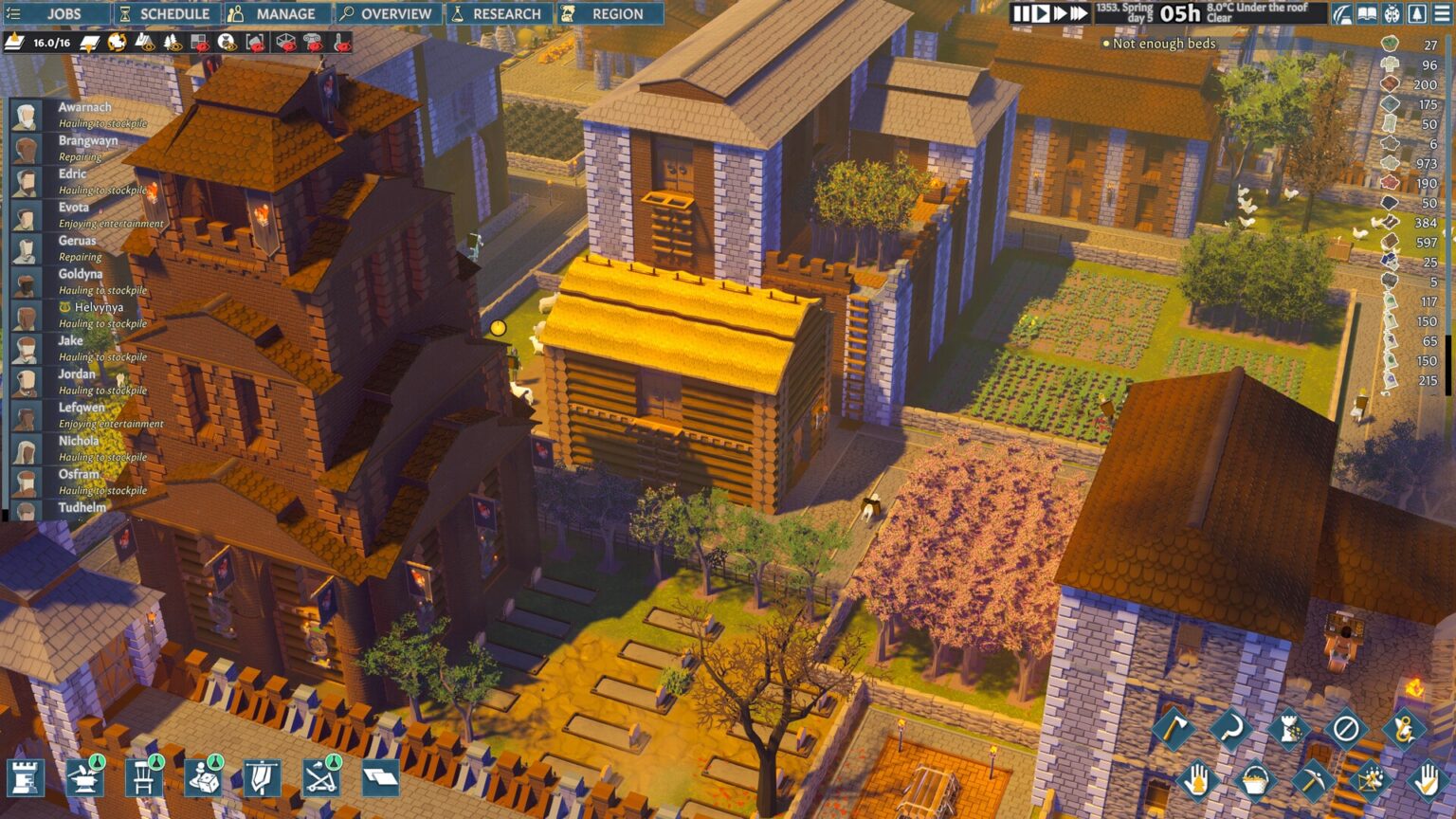
Visually, “Going Medieval” offers a charming aesthetic that blends pixel art with modern graphical techniques, creating an inviting yet rustic atmosphere. The world is vibrant and laden with detail, from the lush fields of crops that players meticulously cultivate to the intricacies of the structures they build. The attention to detail extends beyond just visuals; sound design underpins the gameplay, with ambient sounds adding a layer of immersion that competes well with other titles in the genre.
Story and Game Design
The narrative structure in “Going Medieval” is woven into gameplay mechanics, allowing for organic storytelling born from player decisions and random events. My experience with the game introduced me to a trader seeking to barter wares, along with a character named Athelstane, whose backstory tied directly into my colony’s progression. The decision to harbor him, thereby risking an impending attack, added tension and a sense of consequence, one of the hallmark elements that keeps players engaged. Such moments build an emotional investment, as players become attached to their settlers and their fates.
Strengths and Weaknesses
One notable strength of “Going Medieval” lies in its richness in player choice, encouraging management of resources, strategic planning, and long-term survival. The game’s pacing, beginning with the relative calm of spring and building into the challenges of winter, creates a natural ebb and flow, allowing for preparation and adaptation. However, some may find the learning curve initially steep, primarily if they lack experience with similar titles.
As the game progresses, players find themselves grappling with limited resources and the pressure of survival. From building adequate defenses against hostile raids to managing the mental and physical well-being of settlers, the gameplay continuously evolves, testing players’ strategizing capabilities.
Community Feedback
As “Going Medieval” transitions from Early Access, player feedback has praised its engaging story generator, which unfolds through diverse events and interactions. The balancing of management mechanics and creative building offers a satisfying blend of strategy and artistry, fostering a strong community that shares their own tales of chaos and triumph.
Final Analysis
In summary, “Going Medieval” emerges as a formidable entry in the colony simulation genre, skillfully combining rich gameplay mechanics, vibrant visuals, and organic storytelling elements to create a compelling player experience. While it may require patience and dedication to master, the rewards of survival and community-building are substantial. After only a handful of hours, the game has undoubtedly captured my interest, and it promises to offer even more depth in future explorations. For those drawn to colonization and management, “Going Medieval” is available now on Steam, and it is poised to deliver countless hours of immersive gameplay.